
Backdrop pending
Back to catalog
Now streaming
The Swan
Directed by Paul L. Stein’193072 minPre-Code / Romance / Comedy
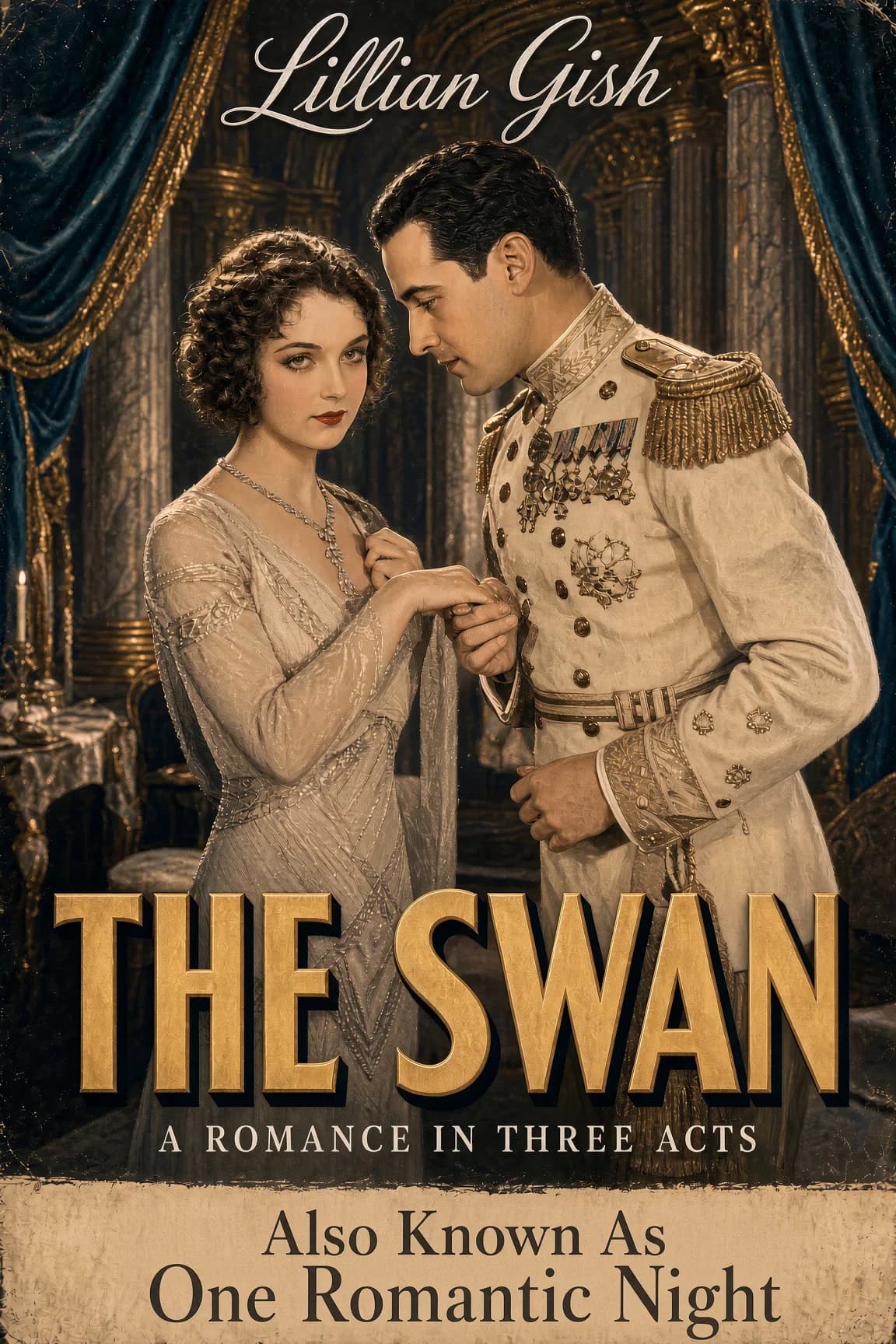
A princess is pushed by her ambitious mother toward a royal marriage while her heart leans toward the family’s tutor. Paul L. Stein’s 1930 United Artists pre-Code romantic comedy is the first sound adaptation of Ferenc Molnár’s play The Swan (a silent version had appeared in 1925; the better-known Technicolor remake with Grace Kelly arrived in 1956). It also marks silent-screen star Lillian Gish’s talkie debut as Princess Alexandra. Marie Dressler is the scheming Princess Beatrice, Rod La Rocque the reluctant Crown Prince Albert, and Conrad Nagel the commoner tutor who complicates the match. In this version the princess and the prince ultimately elope. Photographed by Karl Struss, the film is stage-bound and only modestly successful, yet it preserves Gish’s delicate presence in an early sound context and remains the middle entry in the three film versions of Molnár’s gentle comedy of rank and romance.
Free accounts can unlock two movies or seasons each month. Membership includes unlimited eligible films, episodes, and commentary editions.
Share this film
Send the watch link, make a branded Story card, or choose an exact 30-second moment when this title is cleared for excerpts.
Share options ready.
Community
Discuss The Swan
Follow durable conversations that selected or mentioned this movie.
No one has started a discussion about this movie yet.
You can be the first.
A private space for every film
Build your own archive
Sign in to log watches, rate films, save thoughts, and return to favorite moments. Nothing is posted publicly.
Sign in to startAbout the film
A princess is pushed by her ambitious mother toward a royal marriage while her heart leans toward the family’s tutor. Paul L. Stein’s 1930 United Artists pre-Code romantic comedy is the first sound adaptation of Ferenc Molnár’s play The Swan (a silent version had appeared in 1925; the better-known Technicolor remake with Grace Kelly arrived in 1956). It also marks silent-screen star Lillian Gish’s talkie debut as Princess Alexandra. Marie Dressler is the scheming Princess Beatrice, Rod La Rocque the reluctant Crown Prince Albert, and Conrad Nagel the commoner tutor who complicates the match. In this version the princess and the prince ultimately elope. Photographed by Karl Struss, the film is stage-bound and only modestly successful, yet it preserves Gish’s delicate presence in an early sound context and remains the middle entry in the three film versions of Molnár’s gentle comedy of rank and romance.
- Director
- Paul L. Stein’
- Year
- 1930
- Runtime
- 72 min
- Genres
- Pre-Code / Romance / Comedy